Every US Flight Grounded on Friday the 13th: Did the FAA's New AI Do It?
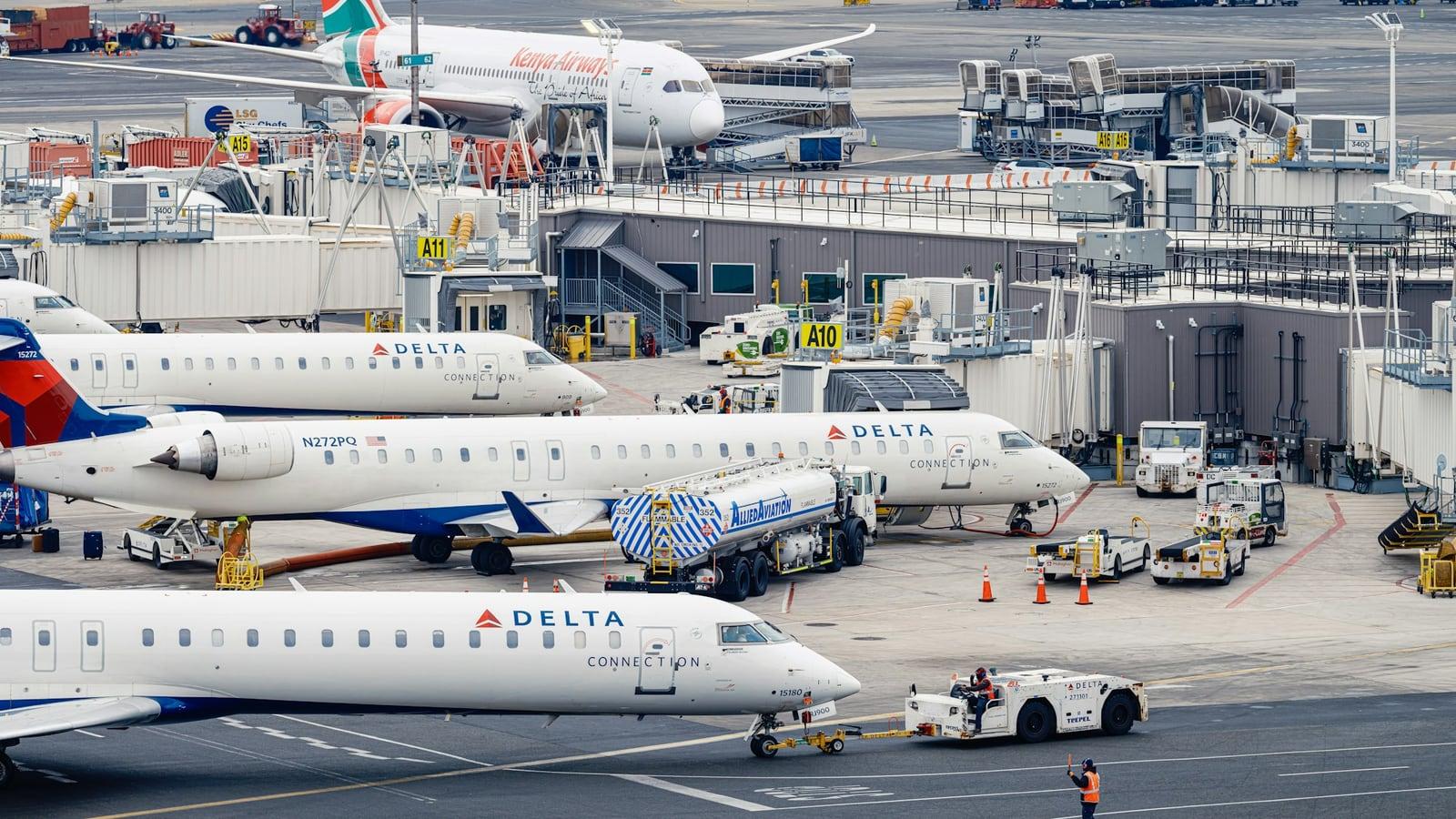
At about 4 p.m. Eastern on Friday, 13 November 2026, the Federal Aviation Administration stopped every departing flight at every airport in the United States. Planes already in the air were landed or turned around. Everyone else stayed at the gate. According to AP, it was only the second nationwide grounding since the September 11 attacks.
The official reason was a communications problem across all 22 of the FAA's Air Route Traffic Control Centers, the facilities that guide planes between airports. And earlier that same week, the FAA had switched on a new AI system called SMART in those same 22 centers.
You can see why plenty of people connected the dots. So did AI ground America? Here is what is actually known, what is only reported, and what Friday should teach anyone who depends on "smart" systems. Which, by now, is all of us.
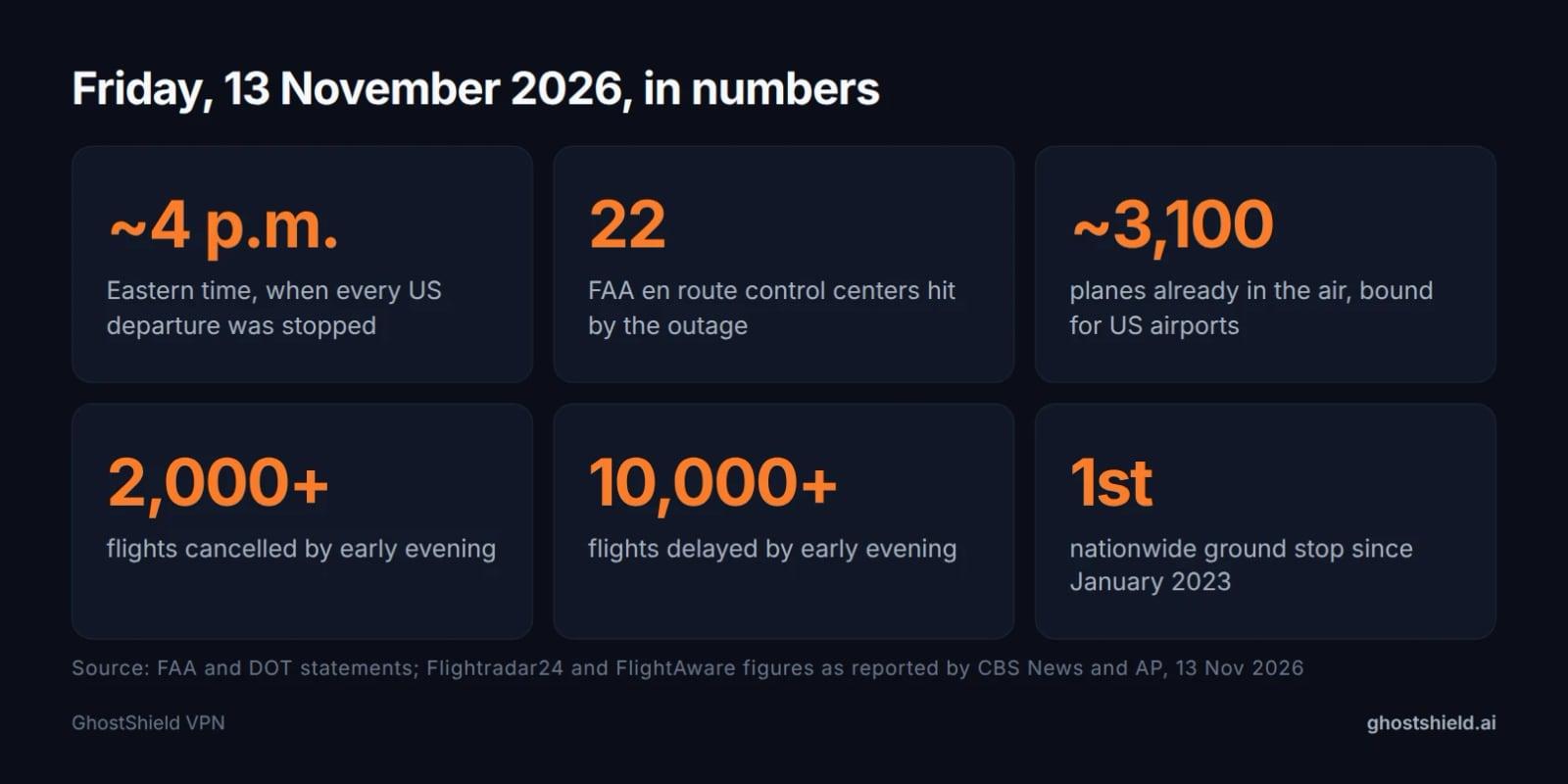 The day in numbers, from the FAA, Flightradar24 and FlightAware as reported on Friday evening.
What happened on Friday the 13th
The FAA issued the ground stop at about 4 p.m. Eastern, CNBC reported, citing extraordinary circumstances and safety. Transportation Secretary Sean Duffy described a communication issue affecting every Air Route Traffic Control Center in the country.
Those centers handle planes at cruising altitude, between the airport towers. Controllers there talk to pilots over radio links that ride on a nationwide telecom network. When controllers cannot count on reaching pilots, the safe move is to stop sending new planes up. That is exactly what the FAA did.
The numbers piled up fast. Flightradar24 counted about 3,100 aircraft in the air and bound for US airports when the stop began, and by early evening FlightAware listed more than 2,000 cancellations and more than 10,000 delays, CBS News reported. AP put the number of flights scheduled to leave after 4 p.m. at about 11,000, carrying more than 1.5 million passengers.
Shortly after 6 p.m. Eastern, the FAA said flights would be allowed to depart as the en route centers recovered. A handful of international flights left the coasts that evening, and the delays ran on into the night.
 Photo by Guohua Song on Pexels
The last time this happened was January 2023, when a key FAA computer system that sends safety notices to pilots failed overnight. That stop lasted a few hours. Friday's came with no warning in the middle of a busy afternoon.
So what actually caused it?
The FAA has not published a root cause yet. Here is what is on the record so far.
The FAA and the White House called it a telecommunications outage. Homeland Security Secretary Markwayne Mullin said there was no indication of a nefarious act.
CBS News, citing multiple sources, reported that an update to the private communications network that connects the air traffic control system made it reboot, which led to a crash and the outage. That network is operated by the contractor L3Harris, which did not immediately respond.
Bloomberg reported that the FBI is looking at whether a software update gone wrong was to blame. CNN reported, from an airline source, that the FAA told airlines the problem was with network routers.
Microsoft, which had its own Outlook and Teams outages that week, said it had no indication the two were related.
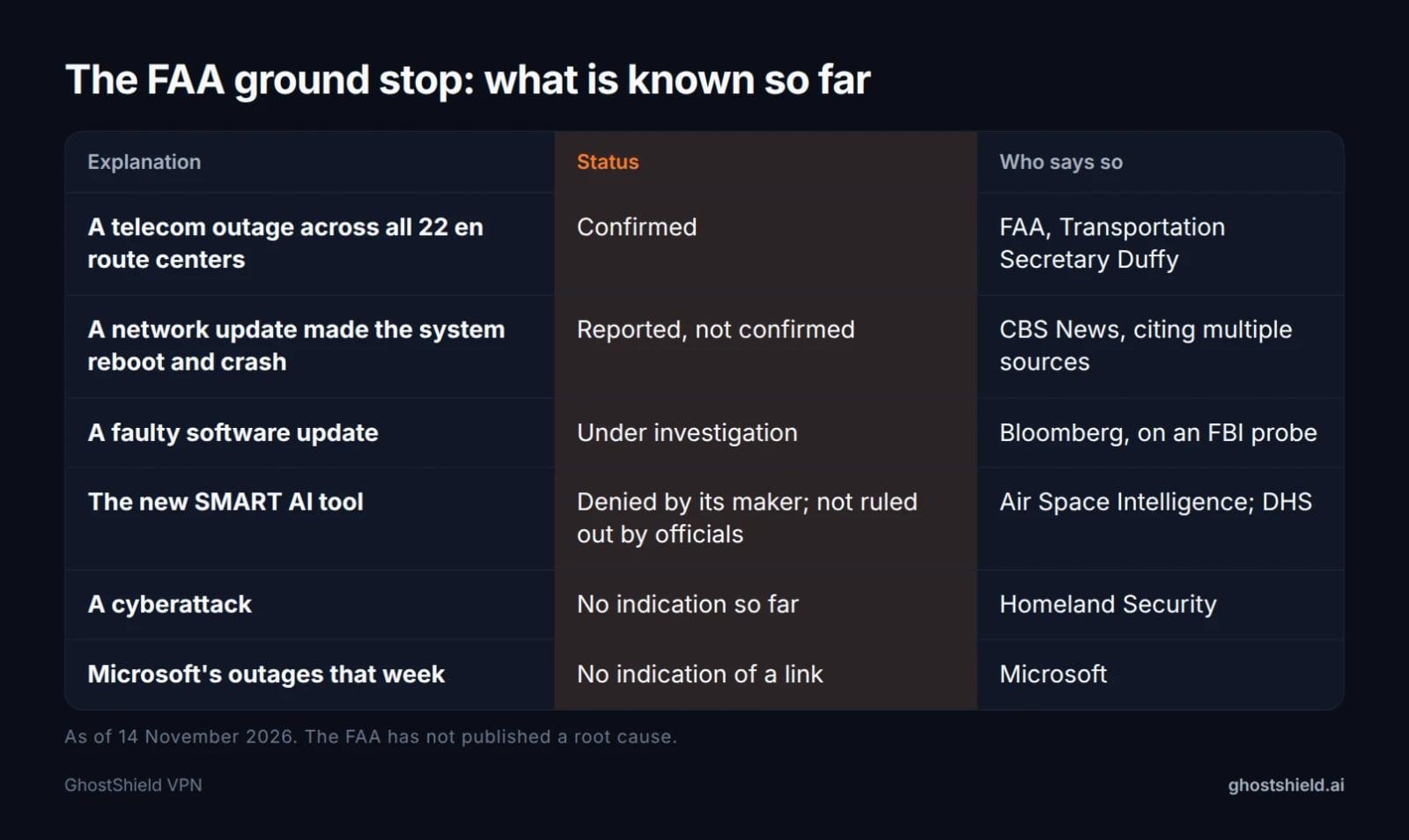 Where each explanation stands. Reported is not the same as confirmed.
Put simply, the strongest reporting points to one change in one shared network. Not a hacker, and not a robot. But that is still reporting, not an official finding.
The AI question: what is SMART, and did it do this?
SMART stands for Strategic Management of Airspace, Routes and Trajectories. It was built by Air Space Intelligence, under a 12-year contract reported at $875 million by the Latin Times.
What it does is narrower than the name suggests. SMART pulls together live data, about 200 feeds according to the Latin Times, and suggests route and schedule changes so flights avoid storms and congestion, cutting delays and fuel. FAA specialists review the suggestions, and local facilities decide whether to use them. The FAA has said SMART cannot replace controllers and cannot take control of an aircraft. AP describes it as running from one location near Washington and sending recommendations only.
The FAA rolled SMART out to all 22 en route centers earlier that same week. That timing is why the questions started within minutes.
Air Space Intelligence answered on Friday evening that the ground stop was "not based on or a result of the SMART system", nor any other product of the company. Asked about it on television, Mullin said investigators were looking at it and that nothing could be ruled out yet.
Our read: based on everything public, there is no evidence that SMART caused this. A tool that suggests routes is not the system controllers use to talk to pilots, and the reported fault sits in the communications network underneath both. Until an investigation says otherwise, the timing is a coincidence.
Why "smart" systems still made a day like Friday possible
Here is the part worth losing sleep over. It does not take a rogue AI to ground a country. It takes connection.
Modern infrastructure runs on fewer, bigger, more connected systems. That is exactly what makes a tool like SMART possible: one platform that sees every flight, every storm cell and every delay at once. It is also what turns one bad change into a national event.
We have seen this film before. In July 2024 a faulty CrowdStrike update crashed millions of Windows computers within hours, and airlines cancelled thousands of flights over the following days. In January 2023 it was a damaged file in the FAA's own notice system. On Friday the reported trigger was an update to a network that every en route center depends on.
Every new "smart" layer adds real value, and every one adds a dependency. AI does not have to make a bad decision to cause trouble. It only has to be one more thing wired into everything, updated from one place, failing in one place.
The good news is that people stayed in charge. When communications failed, controllers did the safe, boring thing: stop departures and bring down the planes already flying. AP reported that by early evening about 600 flights had been diverted, most of them back to the airport they left.
We build with AI every day at GhostShield. Our threat detection is a machine learning model that blocks connections to phishing and malware sites. So this is not an anti-AI argument. It is an argument against single points of failure, in an air traffic network or on your own phone.
The second wave: what stranded travelers do next
When thousands of people are stuck at gates and in hotel lobbies, they all do the same three things. They join whatever Wi-Fi they can find. They try to rebook on their phones. And they tap on anything that looks like help.
Scammers know that playbook as well as anyone. Every big travel meltdown brings fake rebooking messages, fake refund forms and fake support accounts, because frustrated people move fast and check less.
Airport and hotel Wi-Fi is shared with strangers
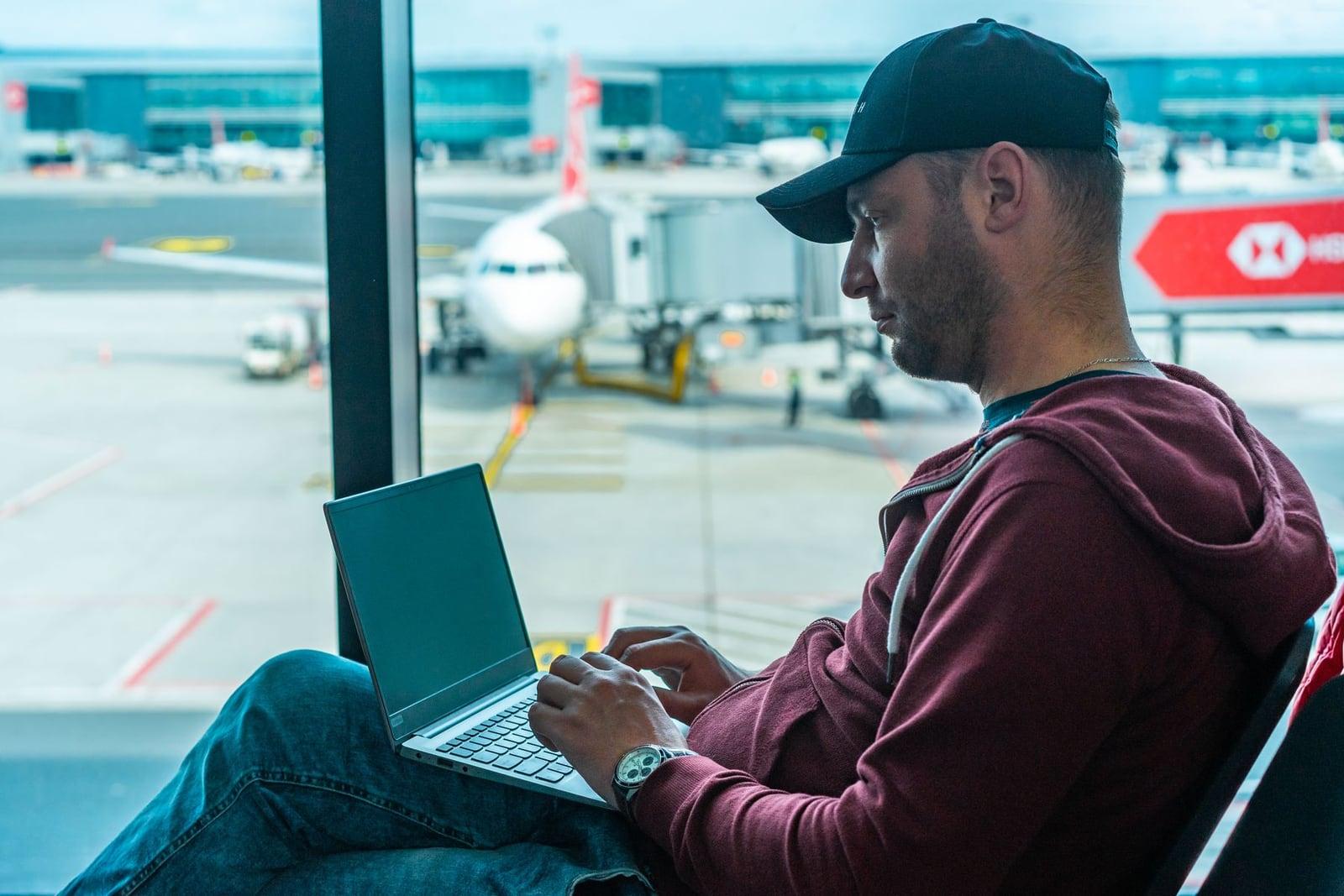 Photo by Atlantic Ambience on Pexels
Anyone can set up a hotspot called "Airport Free WiFi". A lookalike network like that, often called an evil twin, can see which sites you visit, push you to fake sign-in pages and tamper with anything that is not encrypted. HTTPS protects what you type on most websites, but a hostile network still sees where you go, and plenty of apps leak more than you would expect.
A VPN wraps everything your device sends in an encrypted tunnel before it touches the airport or hotel network. The person running the hotspot sees one scrambled connection, not your bank, your email or your airline account. Our guide to public Wi-Fi safety covers the rest of the routine.
Fake rebooking texts, fake refunds and fake "support"
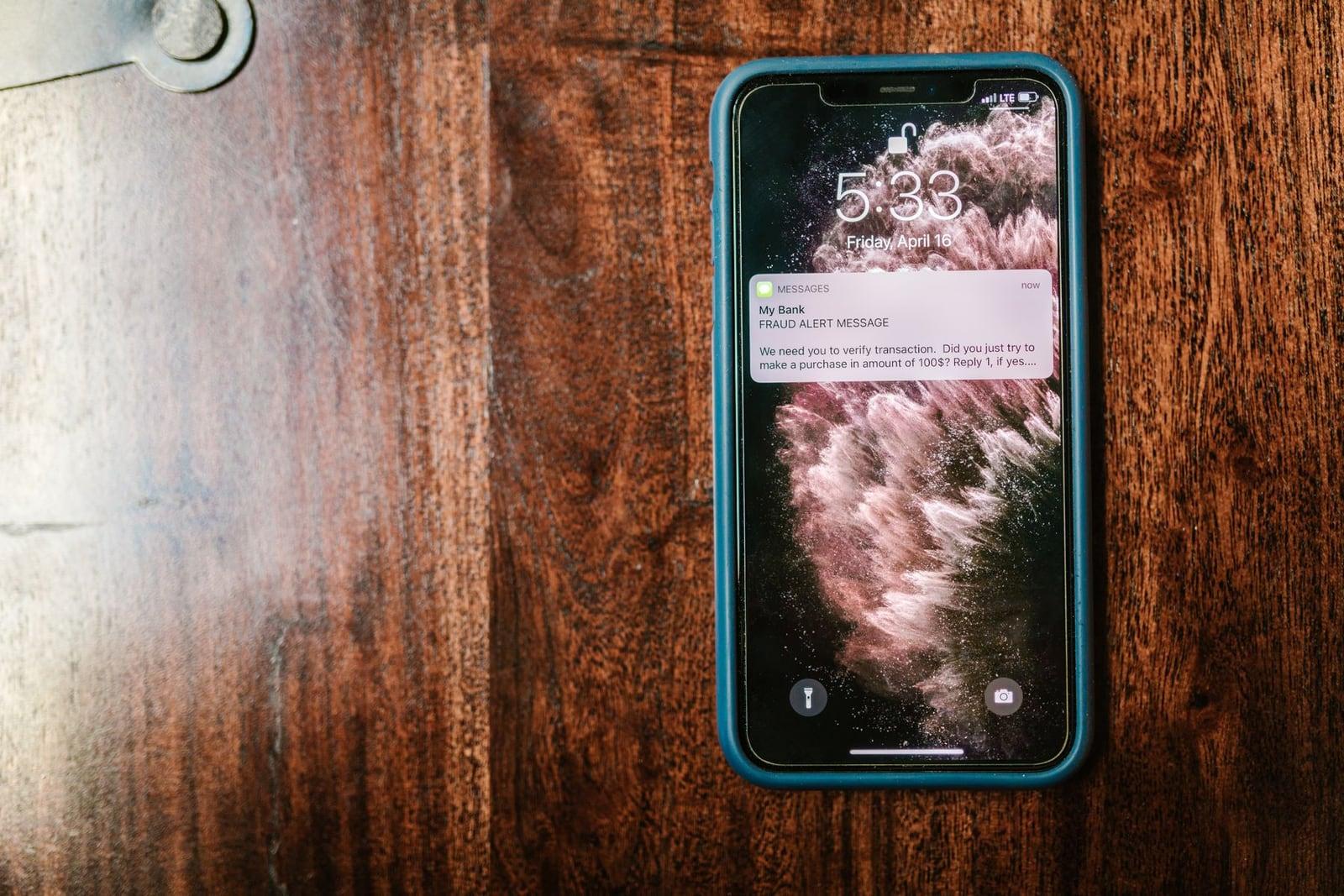 Photo by RDNE Stock project on Pexels
The pattern is always the same. A text says your flight was cancelled and asks you to tap a link to rebook. A friendly "airline support" account replies to your angry post and asks for your confirmation number or card. A refund page looks right except for the address bar.
The real airlines posted their options on their own sites. TheTravel rounded them up: United waived change fees for flights from 12 to 20 November, Delta allowed free rebooking or an eCredit for 13 and 14 November flights, and Southwest and Frontier posted their own flexible terms. Get to those pages by opening the airline's app or typing its address yourself, never through a link someone sent you. Our guide to spotting AI scams shows the newer tricks.
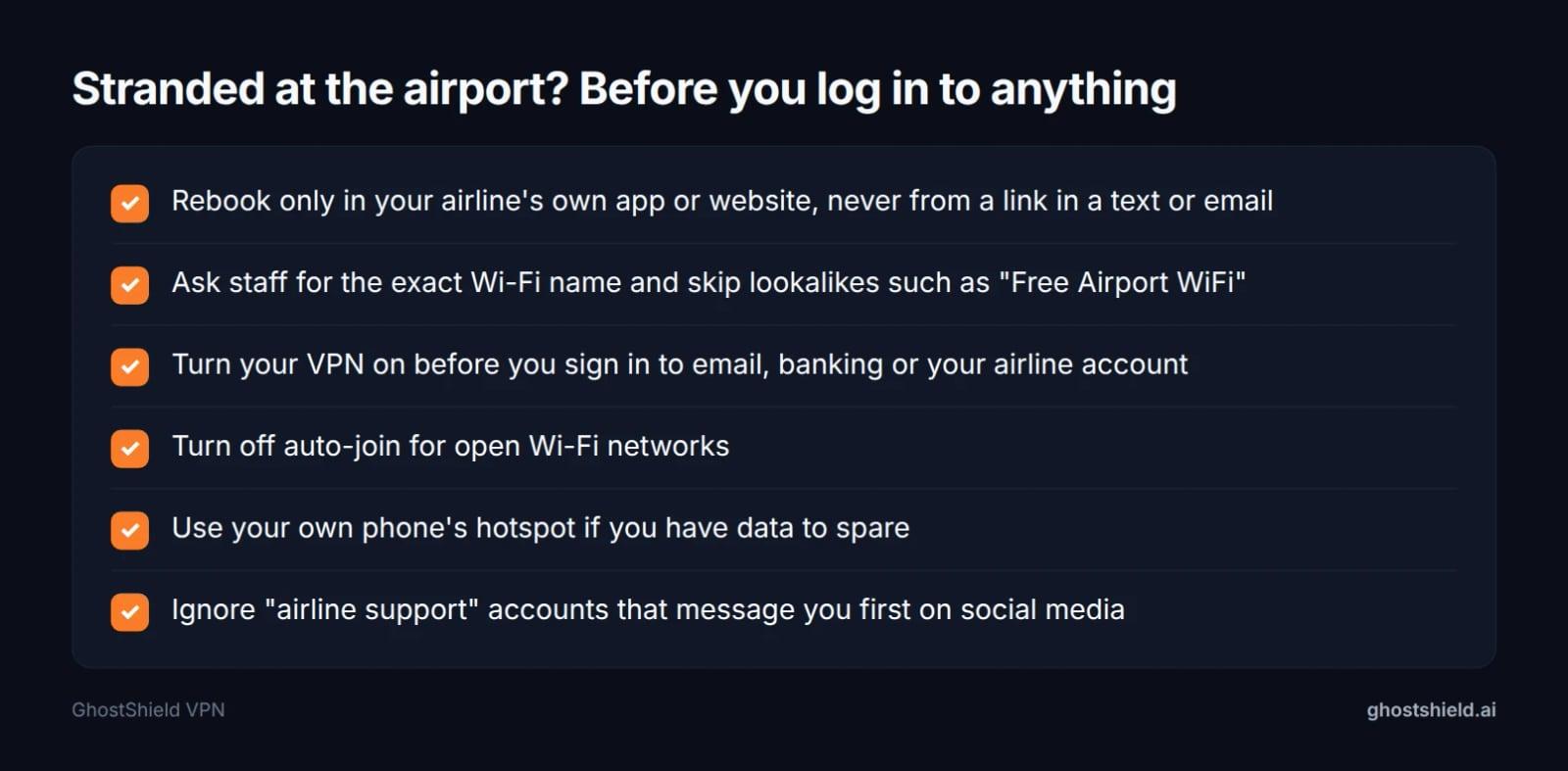 Six habits that take two minutes and stop most of what goes wrong on airport Wi-Fi.
Where GhostShield VPN fits
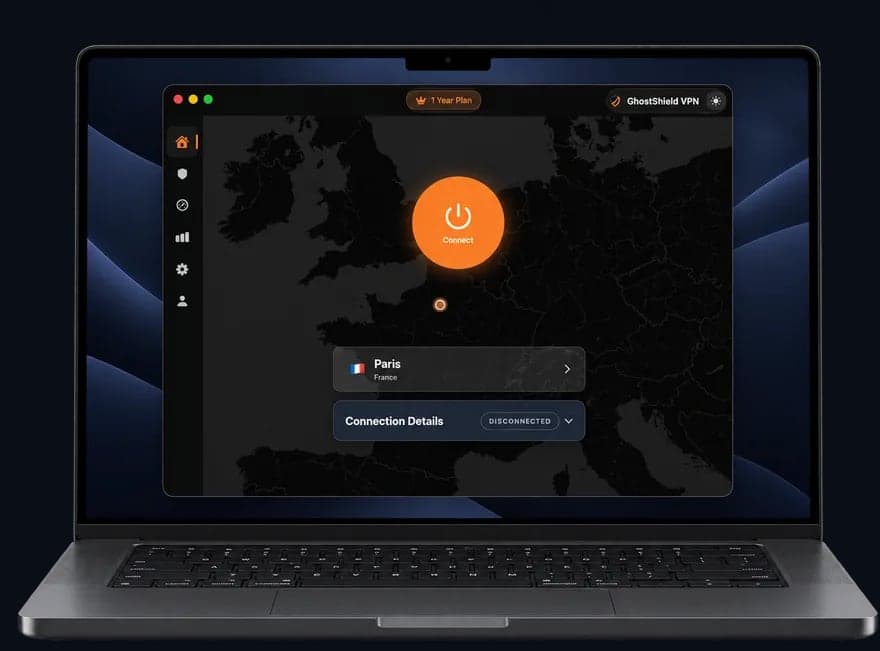 GhostShield VPN app on a MacBook
A VPN will not get you on a plane, and it cannot stop an outage. What it does is make the hours you spend on borrowed Wi-Fi a lot less risky.
GhostShield VPN encrypts everything your phone or laptop sends with WireGuard and ChaCha20-Poly1305, whether you are on airport, hotel or coffee shop Wi-Fi. The kill switch blocks your apps from sending anything outside the tunnel if the connection drops, which matters on crowded terminal Wi-Fi. DNS leak protection keeps the sites you look up inside the tunnel too.
Our AI threat detection blocks connections to destinations flagged as phishing or malware, and ad and malware blocking stops known bad domains before they load. No tool catches every scam, so the checklist above still matters, but it catches a lot of the links people tap in a hurry.
One plan covers 10 devices at once, so your phone, laptop, tablet and the rest of the family are covered at the same gate. The apps run on Windows, macOS, Android, iPhone and iPad, and Google TV.
For Black Friday, the 1-year plan is $2.99 a month with 3 extra months free, which is $44.85 for 15 months. The 3-year plan is $2.49 a month with 6 extra months. The deal runs until December 1, and plans renew at the regular price after that. Every plan starts with a 7-day free trial, and there is a 30-day money-back guarantee.
Start your 7-day free trial before your next trip, not at the gate.
One limit worth knowing if you travel abroad: there is no obfuscation, so GhostShield VPN is not reliable in China, Russia, Iran or the UAE.
FAQ
Why were all US flights grounded on November 13, 2026?
The FAA stopped every departure nationwide at about 4 p.m. Eastern after a communications outage hit all 22 of its Air Route Traffic Control Centers. Officials called it a telecommunications outage. Reports point to an update to the private network that links the centers, but the FAA has not confirmed a root cause.
Did AI cause the FAA ground stop?
There is no evidence that it did. The FAA had rolled out its SMART AI tool to all 22 en route centers earlier that week, which is why people asked. SMART's maker, Air Space Intelligence, says the ground stop was not a result of SMART, and the strongest reporting points to the communications network instead. Officials have said they are looking at everything.
What is the FAA's SMART system?
SMART, short for Strategic Management of Airspace, Routes and Trajectories, is an AI tool built by Air Space Intelligence. It combines live data and recommends route and schedule changes to avoid weather and congestion. FAA staff review its suggestions, and the FAA says it cannot replace controllers or take control of an aircraft.
Was the FAA outage a cyberattack?
Not according to anything public so far. Homeland Security Secretary Markwayne Mullin said there was no indication of a nefarious act, and Bloomberg reported that the FBI is examining whether a software update caused the outage.
Is it safe to use airport Wi-Fi?
It is safe enough for reading the news, and risky for anything you sign in to. Airport networks are shared with strangers, and fake hotspots with official-sounding names are easy to set up. Check the exact network name with staff, turn off auto-join, and use a VPN before you open email, banking or your airline account.
Do I need a VPN at the airport if websites already use HTTPS?
HTTPS protects what you send to most websites, but a hostile network can still see which sites you visit, send you to lookalike sign-in pages and tamper with traffic that is not encrypted. A VPN encrypts everything between your device and the VPN server, including your DNS lookups, so the hotspot owner sees none of it.
How long did the FAA ground stop last?
The stop began at about 4 p.m. Eastern. Shortly after 6 p.m., the FAA said flights would be allowed to depart as its centers recovered, and departures restarted gradually through the evening, with delays continuing into the night.
Related Topics
Keep Reading

AI-Powered Malware in 2026: Simple Steps to Protect Your Devices Now
How to Secure Your Smart Home from Hackers in 10 Minutes
Illinois May Ban Smart Glasses While Driving—Here’s What You Need to Know

UK Passport Data Leak: How to Check & Protect Your Details Now

How to Spot Fake Claude AI Downloads and Avoid Malware Scams
