Is It Safe in Costa Rica? 2026 Traveler Safety Guide
Yes, Costa Rica is relatively safe for tourists who take normal precautions. NomadSister says the most frequent problems are pickpocketing and theft of valuables left unattended. The US Embassy in Costa Rica is more cautious. It warns that crime is increasing, that US citizens are frequent victims, and that petty theft is the main problem, although armed robberies have occurred. Canada keeps a nationwide "exercise a high degree of caution" level. NomadSister also cites the 2024 Global Peace Index, which ranks Costa Rica first among Central American countries.
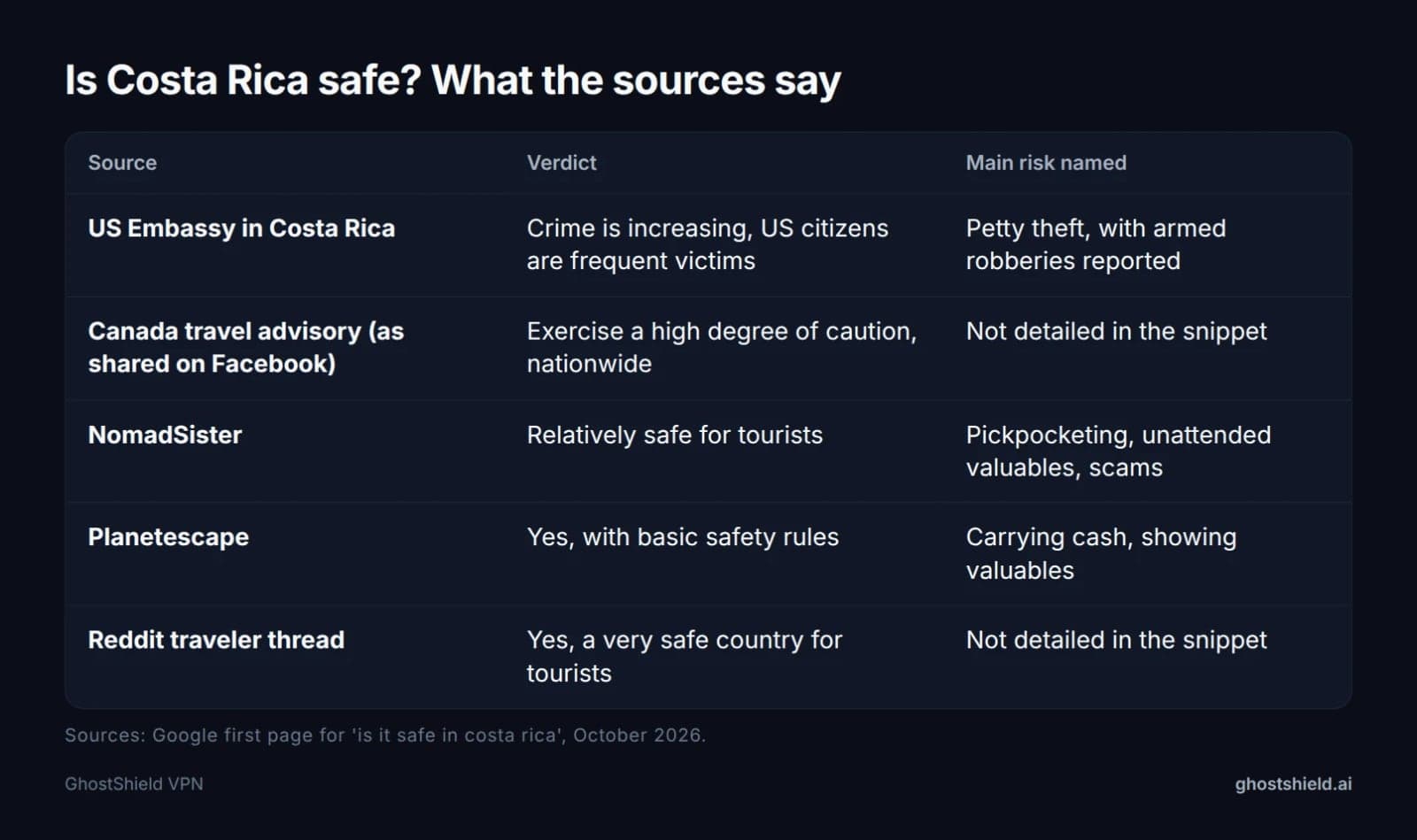 The sources agree on the main risk, petty theft. They differ on how worried you should be.
Is it safe in Costa Rica? The short answer
For most visitors, yes. The real risk is losing a phone, wallet or bag to an opportunist, not violent crime. If you plan for that, you remove most of the danger.
Plenty of people ask. US searches for "is it safe in costa rica" ran between 14,800 and 27,100 a month over the past year (DataForSEO, October 2026).
The sources on Google's first page can look like they disagree, but they don't. They describe the same risks with different levels of alarm.
One result on page one is a Tripadvisor forum thread that calls Costa Rica "crime-ridden". It was posted in December 2011, so treat it as an old opinion, not a current picture.
Costa Rica travel warnings today: US, Canada and UK
Official advisories are the most reliable starting point, because governments update them when conditions change.
What the US Embassy says
The Embassy's "Threat from Crime" page is the most authoritative source on page one. Google shows only a snippet, so read the full page before you go.
Canada's 'high degree of caution' level
A post in a Costa Rica travel group on Facebook reports that Canada has kept the whole country under an "exercise a high degree of caution" warning. That is a step above normal precautions. Check the live Costa Rica page on travel.gc.ca before you book, since a shared post can fall out of date.
Is Costa Rica safe for Brits?
British visitors face the same street risks as any tourist: pickpocketing, bag theft and theft from cars. Read the current Costa Rica page on GOV.UK foreign travel advice, which sets the UK's official level.
Whichever country you're from, check your advisory again the week you fly. These pages can change without much notice.
What to beware of in Costa Rica: crime and scams
NomadSister, citing Public Security Ministry data, says most incidents involving tourists are opportunistic offenses. It also reports that crime in tourist areas fell slightly in 2023 after the tourist police were strengthened.
Pickpocketing and theft from bags and cars
Theft happens where tourists relax: bus stations, busy streets, beaches and parked rental cars. Planetescape's core rules are simple. Don't carry large sums of money, don't display valuables, and stay aware of your surroundings.
Keep your phone in a front pocket, wear a bag across your body, and leave your passport in the hotel safe with a copy on your phone.
Common tourist scams
NomadSister names three scams that catch visitors. Each has a simple fix.
| Scam | How it works | What to do |
|---|---|---|
| Fake guides | Someone offers a tour or park entry and disappears with the money | Book guides through your hotel or a known operator |
| Inflated prices | You're charged a "tourist price" after the service | Agree on the price before you ride, eat or book |
| Monitored cash withdrawals | Someone watches you at an ATM, then follows or skims you | Use ATMs inside banks or malls and cover the keypad |
Armed robbery: rare but reported
Armed robbery is the most serious crime on the list. If it happens, hand over what is asked for and don't resist. A phone can be replaced. Report it to the police afterward, since your insurer will usually want a report.
Are cartels a problem in Costa Rica?
None of the pages on Google's first page give cartel figures, so we won't guess. They consistently describe petty and opportunistic crime, not organized violence, as the thing likely to affect tourists.
Areas to avoid in Costa Rica, and how to choose safer ones
Most trouble is local and time-based. A street that is fine at noon can be a poor choice at 10 pm.
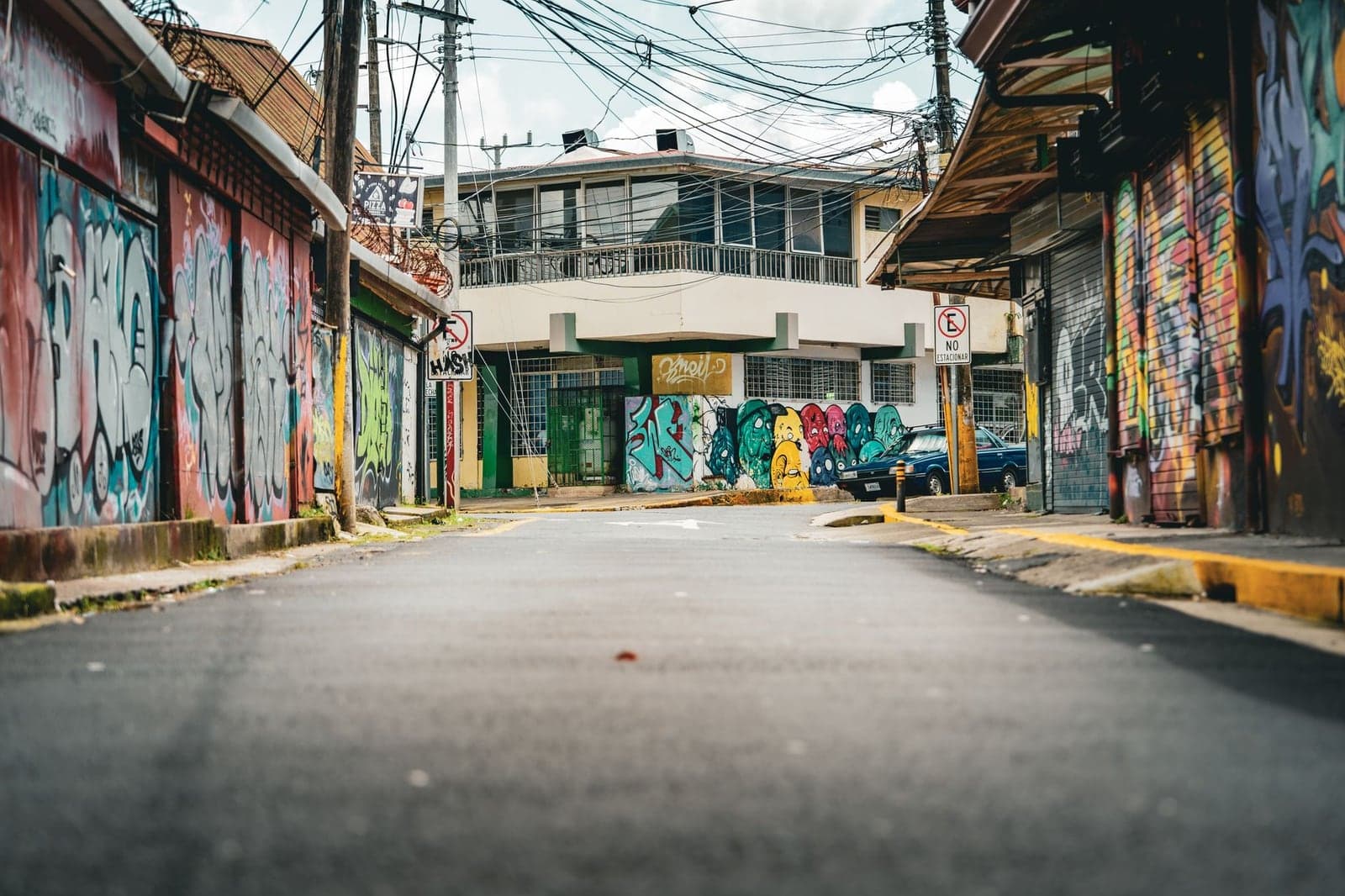 Photo by Mario Spencer on Pexels
San José neighborhoods to skip at night
NomadSister names Calle 6 and Barrio Cristo Rey in San José as areas to avoid in the evening. Many travelers spend only a night in the capital before heading to the coast or mountains, so plan that night around your hotel and a taxi.
Beach towns travelers ask about
In a Costa Rica travel group on Facebook, travelers ask whether Bijagua, Guanacaste, Samara and Tamarindo are safe. For popular beach towns like these, the realistic risk is petty theft. Don't leave bags on the sand while you swim, and never leave anything in view in a parked car.
Finding the safer streets where you stay
Planetescape calls Costa Rica one of the safest countries in Central America, while noting that some places are better avoided because of higher crime. The practical rule works anywhere: ask your hotel which streets to avoid after dark, and take a registered taxi or a ride-hailing car at night rather than walking.
Beach and ocean safety
The beaches are a big reason people go, and for many visitors the ocean is a bigger risk than crime.
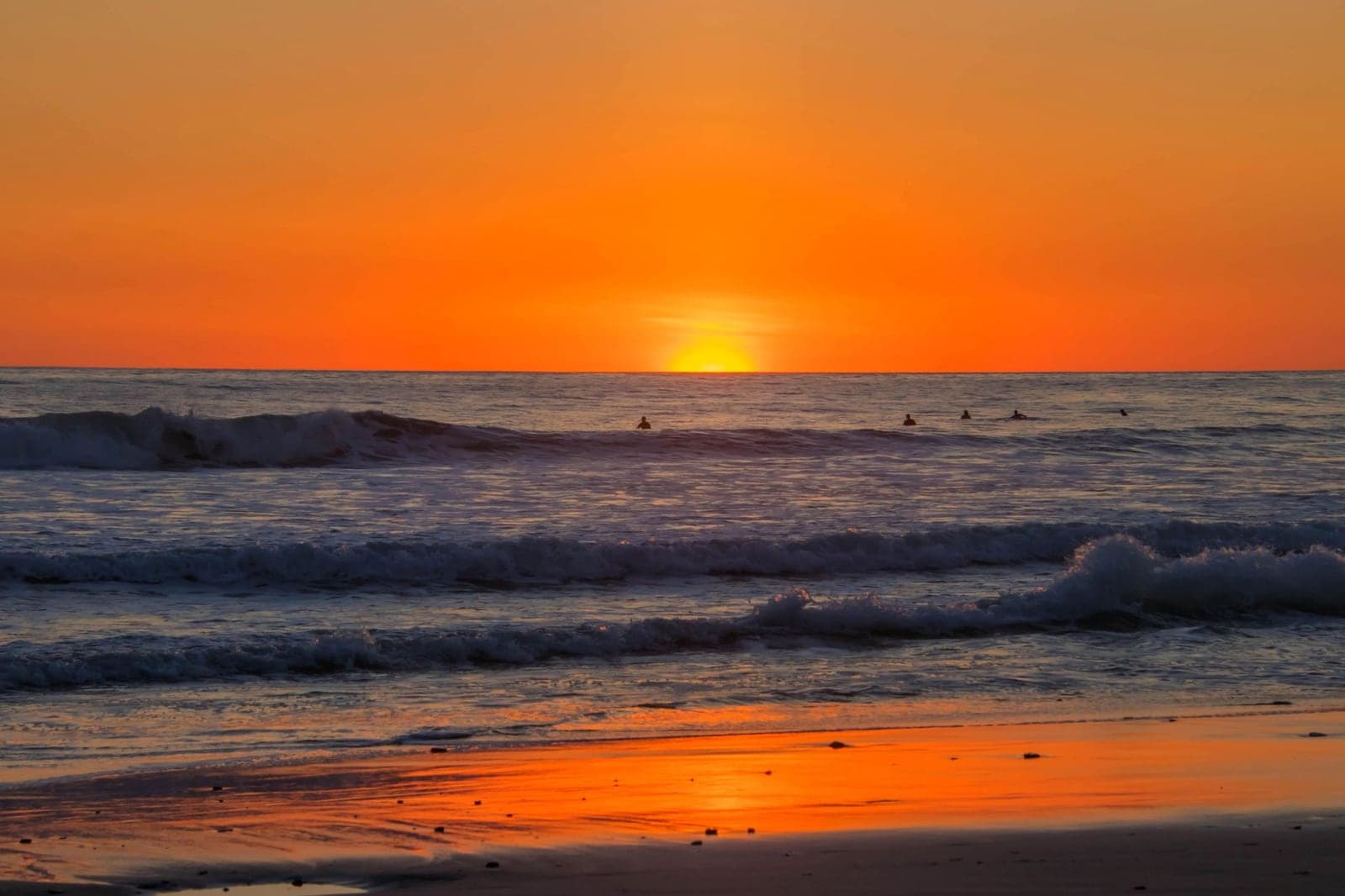 Photo by Diego Madrigal on Pexels
Is it safe to swim in the ocean in Costa Rica?
Often, yes, but take it seriously. Rip currents are common on surf beaches, and not every beach has a lifeguard on duty. Swim where other people are swimming and ask locals or your hotel about conditions that day.
If a rip current pulls you out, don't fight it. Swim parallel to the shore until you're out of the pull, then head back in.
Why can't you go to the beach at night in Costa Rica?
The advice to avoid beaches at night is about safety. They are unlit and often empty, which makes theft easier, and swimming in the dark is far riskier because no one can see you get into trouble.
During the day, never leave phones, wallets or car keys on the sand while you swim.
Food and water safety
Planetescape gives food and water its own section, since you'll want to try local dishes and drink a lot in the heat. A few habits help you avoid an upset stomach:
- Water: as a general travel precaution, drink bottled or filtered water wherever you're unsure of the supply, and ask your hotel whether its tap water is safe.
- Street food: choose busy stalls where food is cooked fresh and served hot, and skip anything that has been sitting out.
- Hands: Planetescape calls good hygiene one of the easiest ways to avoid health problems. Wash your hands before eating and carry hand sanitizer for buses and trails.
Nature risks: earthquakes, weather, wildlife and the sun
Costa Rica's landscape is the main attraction, and it comes with its own risks.
Earthquakes and volcanoes
NomadSister notes that Costa Rica sits on the Pacific Ring of Fire, so it is geologically active. Learn the basic earthquake response (drop, cover and hold on) and follow park rules near active volcanoes.
Rainy season, floods and hurricanes
The rainy season runs from May to November, according to NomadSister, which also points out that Hurricane Otto in 2016 caused significant damage in the north. Heavy rain can flood roads and close routes, so build in spare time.
Dangerous animals and insects in Costa Rica
The wildlife is mostly a delight, and insects are the bigger health risk. Mosquitoes can spread dengue and Zika (NomadSister) and chikungunya (Planetescape). Planetescape notes there is no malaria in Costa Rica. Use repellent and cover up at dusk.
On hikes, NomadSister advises closed shoes and long clothing. Stay on marked trails and don't touch plants or animals you can't identify.
Sun and heat
Planetescape calls SPF 50+ sunscreen an absolute must and advises avoiding the sun between 11:00 and 15:00. Carry water on every outing.
| Risk | Source | Simple protection |
|---|---|---|
| Earthquakes | NomadSister | Know drop, cover and hold on |
| Floods and storms (May to November) | NomadSister | Build spare days into road trips |
| Dengue, Zika, chikungunya | NomadSister, Planetescape | Repellent, long sleeves at dusk |
| Bites and toxic plants on trails | NomadSister | Closed shoes, long clothing, marked trails |
| Sunburn and heat | Planetescape | SPF 50+, shade from 11:00 to 15:00 |
When not to go to Costa Rica
If you want the lowest weather risk, avoid the rainy season from May to November (NomadSister). Expect heavier rain, flooded roads and some storm risk. You can still travel then, but allow more time for driving.
Our search data shows when Americans research the trip. Searches peaked at 27,100 a month in January and February 2026 and fell to 14,800 a month from May to August (DataForSEO, October 2026). The peak falls outside the May to November rainy season NomadSister describes. It shows when people plan, not when you should go.
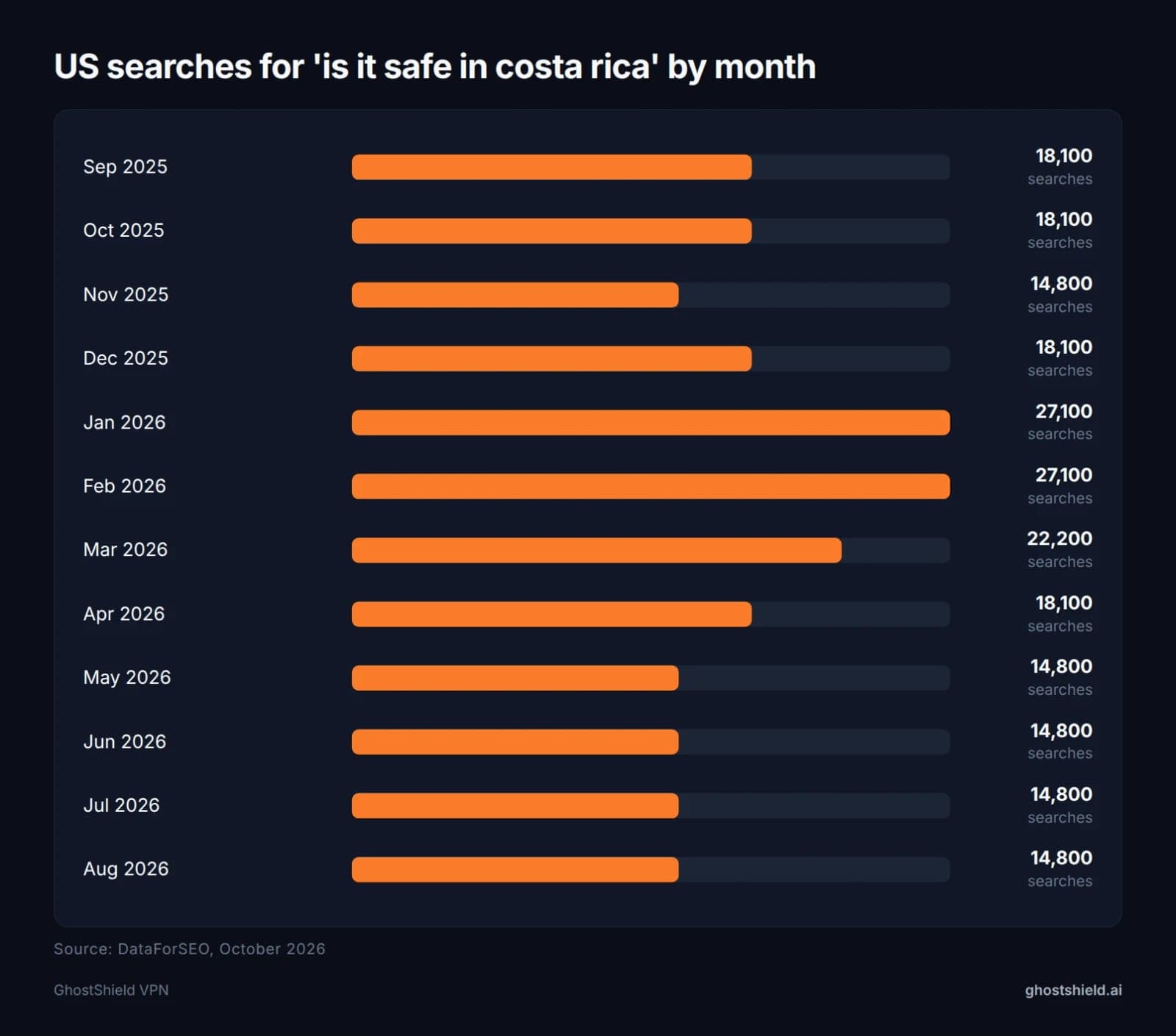 Americans check Costa Rica's safety most in January and February, during the dry season.
Getting around safely: roads, taxis and buses
NomadSister says Costa Rican roads can be tricky: potholes, sometimes poor signage and daredevil drivers. It recommends a 4x4 for regions like the Nicoya Peninsula.
- Don't leave anything visible in a parked car, even for a few minutes.
- Avoid driving rural roads after dark, when potholes and animals are harder to see.
- Use official taxis or ride-hailing apps, and check the plate matches before you get in.
- On buses, keep your bag on your lap rather than in the overhead rack.
Safety advice for solo female travelers
NomadSister, a site for women travelers, gives solo female travel a full section. Its writer says they met numerous solo female travelers sharing positive experiences in Costa Rica. The San José streets it says to avoid in the evening are listed in the San José section above.
NomadSister suggests making local connections from the start of your trip, and offers its own option for doing that. Its transport advice applies doubly when you travel alone: roads can be tricky, so plan routes in daylight.
Simple habits add up:
- Arrive in a new town before dark and know how you'll get to your accommodation.
- Use registered taxis or ride-hailing apps at night, never an unmarked car.
- Book tours through your hotel or a known operator.
- Share your plans and live location with someone at home.
- Avoid quiet streets and empty beaches after dark.
Health, insurance and what to do if something goes wrong
Healthcare and emergency numbers
Planetescape says Costa Rica has relatively well-developed healthcare, but availability varies by region. Dial 911 in an emergency. In remote areas, medical transport may take longer, which matters if you're hiking, surfing or ziplining far from a town.
Why travel insurance matters
NomadSister calls good travel insurance crucial. Check that your policy covers adventure activities and medical evacuation, since basic policies can exclude both.
Keep copies of your passport and cards separate from the originals. Save your bank's overseas fraud number before you fly, so you can freeze a stolen card in minutes.
Digital safety in Costa Rica: wifi, banking and streaming
This is the part the first page skips. None of the top pages cover phone and account safety, yet most travelers spend hours on hotel, hostel and airport wifi.
Hotel, hostel and airport wifi
On shared wifi, anyone on the same network may be able to see traffic that isn't encrypted. Fake hotspots can also copy a hotel's network name to trick you into joining. Confirm the exact network name at reception, and avoid logging in to important accounts on networks you don't recognize.
If you're working during the trip, our guide to staying secure while working remotely covers laptops, logins and work accounts.
Using banking apps abroad
Use your bank's official app, turn on app-based two-factor sign-in, and expect your bank to flag a login from a new country. A VPN can protect that login on public wifi, but connecting from an unusual location can also trigger fraud checks. Read when a VPN helps or hurts online banking before you go.
Charge your phone with your own charger and plug, not a public USB port. Here is how to stop juice jacking at public charging ports.
Reaching your home streaming library
Your US streaming services may show a different catalog while you're abroad. A VPN connected to a US server lets you reach the library you already pay for at home. Some services block VPN traffic, so it won't always work. Our guide to streaming with a VPN explains what to expect.
 Photo by Stefan Coders on Pexels
Set up GhostShield VPN before you leave
- Install the app before you fly. GhostShield VPN has apps for Windows, macOS, Android, iPhone and iPad, and Google TV.
- Make sure the kill switch and DNS leak protection are on. The kill switch blocks traffic if the connection drops; DNS leak protection keeps lookups inside the VPN.
- Connect to a United States location. There are 4 to choose from when you want your home services.
- Confirm the connection. Check your IP address shows the server location.
- Test your lookups. Run a DNS leak test to confirm they go through the VPN.
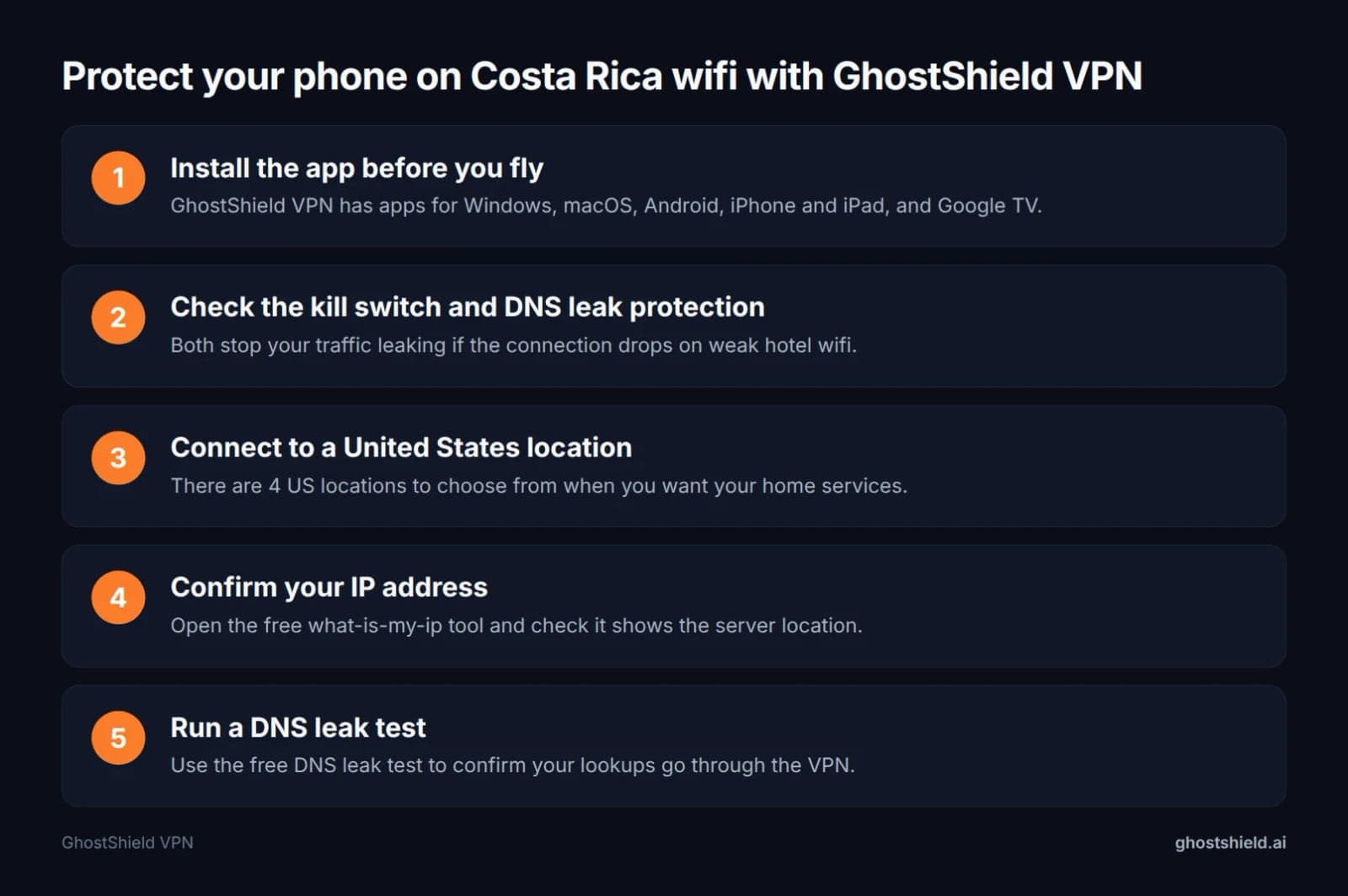 Set this up at home, before you join your first airport network.
If your trip continues somewhere with censorship, read our guide on how to get around internet censorship while traveling. GhostShield VPN is not reliable in China, Russia, Iran or the UAE.
Costa Rica safety checklist
Screenshot or print this before you go:
- Read your government's Costa Rica advisory the week you fly
- Buy travel insurance that covers activities and medical evacuation
- Carry little cash and keep valuables out of sight
- Use ATMs inside banks or malls and cover the keypad
- Book guides through your hotel or a known operator
- Never leave bags on the sand or in a parked car
- Ask locals about currents before you swim
- Drink bottled or filtered water when unsure of the tap
- Pack repellent, hand sanitizer and SPF 50+ sunscreen
- Rent a 4x4 for areas like the Nicoya Peninsula
- Save 911 and your bank's overseas fraud number
- Confirm wifi network names at reception
- Turn on a VPN before using hotel or airport wifi
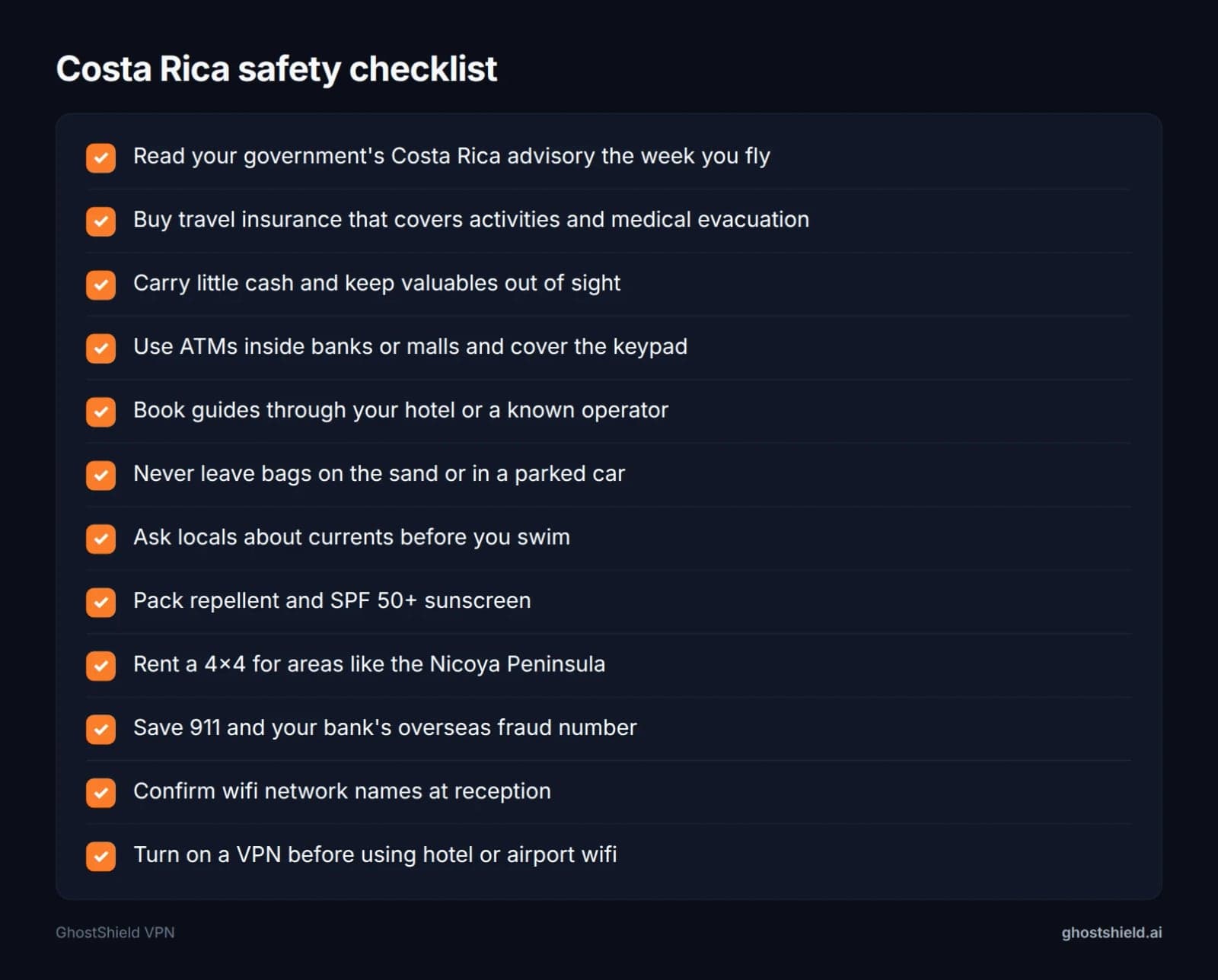 Screenshot or print this before you go.
Keep your phone safe on the trip with GhostShield VPN
GhostShield VPN encrypts your connection with WireGuard on hotel and airport wifi, with a kill switch, DNS leak protection, ad and malware blocking and a strict no-logs policy. One account covers up to 10 devices, so the whole family's phones and laptops are protected on the same trip. Every plan starts with a 7-day free trial and has a 30-day money-back guarantee, so you can start the 7-day free trial a week before you fly and have it set up by the time you land.
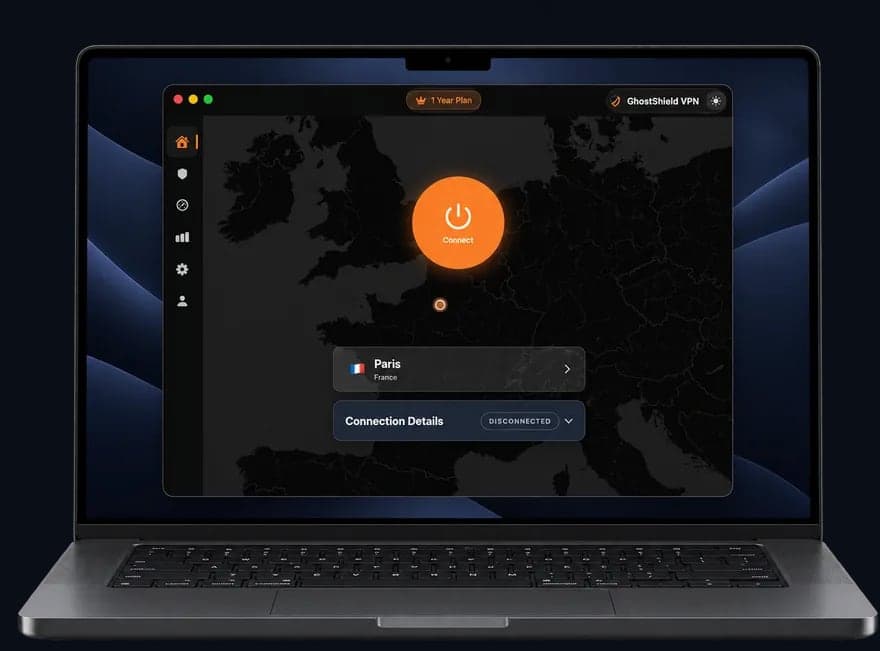 GhostShield VPN app on a MacBook
FAQ
Is $1000 enough for a week in Costa Rica?
It can be, depending on how you travel, though none of the safety pages on Google's first page give a daily budget. Hostels, buses and local restaurants stretch $1000 much further than a rented 4x4 and guided tours. Decide first whether your $1000 includes flights, since that changes the answer most.
Where is Costa Rica?
Costa Rica is a small country in Central America. It borders Nicaragua to the north and Panama to the southeast, with the Pacific Ocean to the west and the Caribbean Sea to the east. The capital is San José. Nonstop flights from Miami or Houston usually take about three to four hours.
What is nicer, Puerto Rico or Costa Rica?
Neither is simply nicer, because they suit different trips. Puerto Rico is a US territory, so US citizens don't need a passport and prices are in US dollars. Costa Rica offers more rainforest, volcanoes and wildlife, with rougher roads and more driving.
Is Costa Rica safe for solo female travelers?
Generally yes. NomadSister, a travel site for women, says its writer met numerous solo female travelers who shared positive experiences in Costa Rica. It advises avoiding certain San José neighborhoods in the evening and planning road trips in daylight. Use registered taxis at night and arrive in new towns before dark.
Is Costa Rica a safe place to live?
Many foreigners live there, but the first-page pages focus on visitors rather than residents. Crime trends matter more over a long stay than a short vacation. If you're thinking of moving, spend time in the area first and ask residents about crime.
Is Costa Rica safer than Mexico?
No page on Google's first page compares the two directly. NomadSister cites the 2024 Global Peace Index ranking Costa Rica first in Central America and among the least dangerous countries in Latin America. Compare both in your government's travel advisories before you choose.
Related Topics
Keep Reading

How to Stay Safe While Working Remotely in 2026: A Simple Security Guide

Public WiFi Safety in 2026: Simple Steps to Work Abroad Without Hackers

How to Work Safely in a Robotaxi: Simple Steps to Avoid Tech Fails & Hackers

OpenVPN UDP vs TCP: Which to Use, and When

VPN for Fubo: Watch Your US Plan While Traveling (2026)